
What are solar and battery tariffs in the UK and their working principles?
Solar and battery tariffs are electricity pricing mechanisms designed to incentivize households to produce, store, and consume electricity in ways that differ from those of traditional energy consumers. Typically, these tariffs create opportunities to improve how electricity is imported from the grid, exported to the supplier, and stored for later use in the home.
The choice of tariff may affect the timing of electricity consumption, the timing of battery storage consumption, and how electricity and battery storage generation are managed throughout the day for a house with solar panels and battery storage. Once you have some idea of the concepts behind tariffs, you can compare them more realistically and minimize the chance of choosing plans that do not correspond with your household habits.
Electricity import and export pricing
A solar household typically uses electricity in two ways. Import pricing is the price paid for electricity when it is imported from the grid. Export pricing: compensation that households can earn when they return unused solar power to the grid. Import/export rates may affect the attractiveness of battery storage.
For certain households, the value of storing solar energy for later use might exceed the value of exporting electricity immediately. For others, export payments may still be a significant element of a long-term energy policy. It is important to understand both the tariff structure and its impact on homeowners, so they can consider the interactions between storage and solar generation, not in isolation.
Off-peak and time-of-use tariffs
Numerous battery-oriented tariffs are running on a time-of-use pricing basis. These tariffs impose varying charges to the use of electricity at different times of the day. Lower cost times may be when there is lower demand and higher cost times may be when there is high demand. This framework can be complemented by battery storage, which enables households to charge their batteries when electricity is cheaper and then draws power from the battery during high demand periods.
But the suitability of the tariff strongly depends on household habits. Households with different energy use patterns might benefit differently from the flexibility of their homes energy use than those with more uniform energy use. While it may be tempting to opt for the lowest advertised tariff, that doesn't necessarily translate to better long-term outcomes.
Smart meter requirements for battery tariffs
Smart meter information plays an important role in many modern solar and battery tariffs, providing accurate information on imported, exported, and time-of-use electricity consumption.
This visibility can also help to better understand:
on the import of electricity
When solar generation is used
during the period of discharge of the stored electricity
Tariff availability varies between suppliers, but households should speak to a supplier early in the planning stages if they are considering battery storage.
Choosing the best solar and battery tariff for your home
Not only is it important to compare electricity prices, but it is also important to choose the right tariff. The best solution will depend on the type of electricity generation, the time of electricity consumption, the presence of electricity storage, and the flexibility in daily activities.
Better tariff results for many homes are achieved by making tariff structures consistent with actual household usage, not just plans that boast about what they will save the customer.
Tariffs for solar panel households
For solar homes, it may be desirable to consider both import and export prices together rather than independently. Strong export rates do not necessarily translate into a good overall household outcome if import prices are less favorable.
However, battery systems can offer greater flexibility in using solar energy, so households with battery storage can approach this differently. The comparison of tariffs is shifting from determining ‘one best rate' to determining which tariff structure is more relevant to the household's energy behavior.
Battery charging and overnight electricity rates
The choice of battery charging strategies has become a greater factor in tariff decisions. Some households may opt to charge storage systems at night when electricity costs are lower and then discharge them at times when electricity costs are higher.
This could be more beneficial for households that have flexible schedules, high electricity usage, or have seasonal electricity production. Overnight charging should still serve the overall goal of household energy use, though, and not the sole motivation to choose a tariff. The best storage results are achieved when charging habits are naturally linked to the home's routine.
Comparing export payments and tariff flexibility
For many solar households, export payments are a crucial component, and flexibility can be just as key.
A slightly lower export rate can lead to a higher value for households. If the export rate is more flexible, the import rate better matches the export rate, or the tariff is more comparable to battery storage.
Households should consider:
electricity usage timing
export opportunities
seasonal generation changes
expected future energy demand
The tariff most likely to reflect how the household actually consumes energy is the strongest in terms of headline numbers.
How battery storage improves tariff savings
The implementation of tariffs on both solar and batteries is more effective if households have the choice of both the source and the timing of electricity use. If there is no storage, electricity generated from the sun during the day may be used that same day, or exported to the electricity grid. Battery storage gives extra flexibility, enabling households to move electricity consumption between different periods of the day, and to be more responsive to the changing tariff structure.
Battery storage is less about storing as much electricity as possible and more about optimizing how energy is used in the household throughout time.
Storing cheaper off-peak electricity
The primary benefit of battery storage that has been discussed is the ability to take advantage of cheaper electricity periods.
Time-of-use and off-peak tariffs allow electricity rates to fluctuate over the course of the day. One way battery storage can help households is by charging during off-peak hours, when electricity is less expensive, and discharging during on-peak hours, when electricity is more expensive. Such an approach can be increasingly relevant for families with a regular energy or household structure and/or a seasonal variation of energy needs.
But it's not a trivial matter of putting tariffs in place, so they're triggered at the lowest electricity price. Better results are achieved when households base their storage decisions on their consumption, expected PV generation, and typical energy use. Appropriate charging management can optimize the flexibilities of the household and prevent unnecessary charging cycles.
Increasing solar self-consumption
Solar power does not always occur when households need electricity the most. The peak solar generation in many houses occurs during daylight hours when the demand is at its highest in the late afternoon and evening. The gap in this time can be filled by the ability of battery storage systems to store excess generation and deliver it at a later time.
Going towards self-consumption means using electricity produced locally at home rather than sending it straight to the grid.
This over time may help to support:
More regular use of household solar production
greater reliability of the electricity supply network
more variety of natural light during the seasons
When a household is both solar and battery, the best path towards improving tariff outcomes frequently lies in maximising self-consumption.
Reducing grid reliance during peak pricing
There may be times of day when electricity demand and prices go up. Reducing the need to import electricity during higher-cost hours by shifting electricity use to already-stored electricity may be possible with battery storage.
This doesn't mean there's no need to use a grid, but it does make it more flexible about when and how electricity is bought. When households adopt solar power, are aware of the tariff, and plan their energy usage with storage, they can achieve more flexibility over energy choices than when only electricity prices are at play.
This typically leads to a more flexible home energy strategy, and not just to cheaper electric bills.
Key factors that affect tariff savings
Tariff results can differ considerably across households depending on electricity usage patterns and system design. The same tariff can yield different results based on time of day, the amount of solar generation and battery storage efficiency. With these considerations in mind, it's easier to make realistic comparisons of tariffs and to direct the family's attention toward realistic long-term outcomes.
Household energy usage patterns
Electricity rates do not always have the greatest impact on energy costs; in fact, home energy practices can have a more significant effect on tariff outcomes.
The use of electricity during the day can influence the value of battery storage providing flexibility. The results achieved may vary from dwellings where electricity consumption is concentrated during the evening hours, to households where evening consumption is more balanced.
Seeing the pattern like:
appliance timing
work-from-home routines
seasonal heating demand
charging behaviour
can develop a clearer idea of the household's most appropriate tariff structures.
Tariffs generally work best if they reinforce existing routines rather than radically alter household behavior.
Solar generation capacity
The effectiveness of solar and battery tariffs depends on the household's total electricity generation. Higher generation can provide more opportunities for energy storage, self-consumption, and reducing imported electricity. Factors such as tariff flexibility and charging strategies could be more important to lower generation households at the same time.
Solar energy production also fluctuates seasonally. Households can gain differential benefits from different tariff structures depending on seasonal variation in weather, orientation of roof, and household demand patterns. It is informative to understand what is expected of the generation so that more realistic expectations for storage and tariffs can be developed.
Battery storage size and charging efficiency
The size of the battery determines the amount of electricity that can be stored, while the efficiency of the charging process can determine how well it can perform its job. In a household where demands are relatively constant and/or solar supply is limited, a larger battery is not necessarily the best solution.
Performance over the long term may be influenced by charging behaviour, storage capacity available and system speed of electricity flow. Households would be better served by choosing battery storage to match their generation patterns and support flexible household energy use, rather than by choosing the largest available battery.
The most effective use of battery storage is when technology, charging habits and tariff design are all aligned in a single strategy.
Tariff challenge → household energy behaviour → smarter coordination → ecosystem → products → soft conclusion
Products remain concise and supportive.
Smart energy solutions for maximizing tariff efficiency
Opting for a better electricity tariff can help ease household energy costs, but choosing a tariff is usually not going to reap the greatest long-term benefits.
Since the price of electricity is becoming more flexible, many homes are finding that better tariff performance will not only require them to select lower prices, but they must use electricity more intelligently, all day long.
The integration of solar battery storage, solar generation and energy visibility into coordinated household energy strategies is becoming common and better adapted to evolving electricity conditions.
Why intelligent energy management improves household savings
Households can value the use of battery storage by determining when to import, store and consume energy.
Lower tariff periods, not coordinated with one another, may not necessarily lead to improvements in the household situation. Electricity brought from lower-cost periods must still match people's use and when the sun is shining.
The possibilities of making energy decisions more responsive, or intelligent energy management, open up opportunities.
This can help households to:
Use of lower cost electricity times
coordinating charging and discharging of batteries to suit the needs of the household
installing more solar power generation capacity
minimizing electricity imports that are not necessary
Creating a more consistent long-term energy behaviour is not just about cutting costs one day at a time, it's about making energy costs more consistent for many households.
Battery systems designed for tariff optimisation
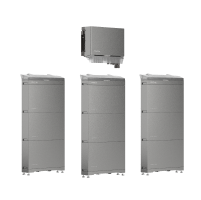
The range of tariff designs has been expanded, and battery systems are increasingly being assessed for their ability to support long-term household energy use. This is where OCEAN 2 Plus Single-Phase seamlessly dovetails into the ongoing discussion of tariff efficiency.
Designed as a residential solar storage system, OCEAN 2 Plus Single-Phase is ideal for homeowners who want to maximize the self-consumption of their solar power and yet have the flexibility to adapt to future electricity consumption. Scalable residential storage can grow with the household's storage needs, rather than encouraging households to build up storage as soon as possible.
A larger EcoFlow storage solution also supports long-term family energy planning, with a long-lasting LFP battery design, an expandable storage design, and flexible installation methods. Long-term performance of residential storage systems can accommodate changing energy habits without forcing households to redesign their energy systems repeatedly. As electricity pricing models evolve, battery flexibility can become more significant for those relying on tariffs.

Integrating tariff optimisation into complete home energy systems
Energy storage integrated into a smart-home energy system is more efficient when installed as part of the system rather than as a single unit.
In practice, this means that the connection between solar generation, battery charging, electricity pricing and household demand are taken into account over the course of the day.
A connected energy approach can support households to transition from reactive energy decision-making to coherent energy planning.
For instance, electricity could be:
Solar generated → stored → scheduled → monitored → used at more suitable times.
Such a structure will also provide a space to enhance the household's energy flexibility while maintaining simple outcomes for consumers. The process of optimizing tariffs evolves overtime, from choosing the "best" single electricity rate to creating a system that responds to what happens.
Examples of smart battery and energy management platforms
As solar and battery tariffs become more dynamic, households are looking beyond battery size to focus on coordination within the home rather than just storage capacity. A battery does not intrinsically mean an improvement in tariff performance. Households are best equipped to maximize varying electricity prices by not just having the storage capability, but the understanding of usage patterns,ability to adapt charge profiles, and programmed control over electricity consumption.
This is where energy management platforms are becoming increasingly relevant in the home energy domain.
The EcoFlow Intelligent HEMS helps orchestrate a more cohesive home energy setup within the broader EcoFlow ecosystem by providing energy visibility, programmability, and system control in a unified location. Beyond basic observation, it enables households to better understand where electricity is produced, stored, and used throughout the day.
This level of coordination allows for functions such as:
Tracking overall home energy usage
Viewing solar generation and home consumption patterns
Scheduling battery charging and home electricity consumption
Optimizing opportunities to self-consume solar power
Reacting to changing tariff conditions
This approach helps users with solar generation and storage make for a more dynamic setup without adding undue complexity to daily routines.
As tariffs become even more flexible, energy management platforms play an increasingly important role in helping households transition from simply tracking usage to actively managing energy more intelligently.

Common mistakes people make when selecting solar tariffs
Not all tariffs are necessarily the most expensive. Households often select tariffs that are not aligned with their actual energy use.
Choosing tariffs based only on the lowest unit rate
While lower advertised prices might be appealing, it is important to consider electricity pricing alongside tariff structures, charging windows, and households' energy behaviors. The tariff may work better, if it fits more naturally into the household's habits, a little higher.
Ignoring export and import pricing together
Sometimes households calculate export payments without accounting for the cost of imported electricity over the course of the day. It is best to consider import and export performance together.
Selecting storage before understanding usage patterns
The size of the battery must be matched to the household's actual needs, not to "what one expects the electricity needs to be". A review of household behavior can positively affect tariff and storage decisions.
Overcomplicating charging schedules
Constantly adjusting charging times may create unnecessary complexity. Energy routines are better for many households than attempting to maximize each energy tariff adjustment.
Underestimating the value of energy visibility
Tariff decision making is frequently based on estimates of household energy behaviour without understanding it. Over time, visibility and monitoring can facilitate more practical tariff selection.
Conclusion
Household electricity consumption is being affected by solar and battery tariffs. More homeowners use not just import prices or export payments today, but are starting to consider the dynamics of energy management, generation, and storage over time.
The best tariff option is often not the one that has the most lucrative headline rate. In practice, more effective results are generally achieved by making household routines, battery usage, and household visibility of energy use match longer-term household objectives. With the evolution of home energy systems, coordinated energy planning could become one of the most practical methods to optimize their flexibility and increase long-term efficiency.
Schedule Your Free Consultation Today!
What kind of product or solution are you interested in?

FAQs
What is the best solar and battery tariff in the UK?
The optimal tariff for each household varies, as the performance of different tariffs depends on the generation, storage, and use of electricity over the course of the day.
Households with solar panel systems might value higher export rates, whereas those that have battery storage could value charging flexibility and time-of-use pricing more highly. Other factors like family habits, seasonal energy production and consumption also have an impact on results. The best tariff is typically the one that most closely reflects household energy usage, and not the lowest advertised tariff.
How do off-peak battery charging tariffs work?
Off-peak battery tariffs are tariffs that provide reduced electricity costs during specific periods of reduced electricity usage, such as at night or during specific charging windows. These tariffs can more effectively incentivize domestic use of battery storage by adjusting the timing of electricity imports and usage.
These are typical off-peak tariff benefits:
Charging home batteries during low cost periods
Using stored electricity later in the day
Providing options to manage electricity costs
The actual value will be determined by the demand for electric vehicles in the household, the tariff structure and the charging habits. Households are most likely to benefit when charging patterns encourage a normal routine and don't add to complexity.
Do I need a smart meter for solar battery tariffs?
Smart meters are often used for solar and battery tariffs, as it allows the recording of electricity imports, exports and time-based usage with better precision. This short interval allows for time-of-use, where charges differ depending on the hour of the day. In addition, battery systems may better interpret battery charging behavior, household electricity consumption, and solar generation patterns using smart meters. While varying across suppliers, many newer solar tariff options work best when smart meters are used.
How does home battery storage improve tariff savings?
Home battery storage can improve tariff outcomes by enabling greater control over when electricity is used. In the absence of batteries, households may be dependent on the electricity they directly take, forcing them to absorb higher costs during peak tariffs. Batteries allow this to be shifted more optimally in line with electricity tariffs. Batteries may affect tariffs: Actual results may vary greatly depending on the size of the battery system, household consumption, generation, and charging. Batteries are most efficient within the overall energy system.
What size home battery system works best with solar tariffs?
There is no single "best" battery size, as household electricity demand can vary greatly. As a rule of thumb, battery storage capacity must reflect domestic electricity consumption levels and be adjusted to the conditions, such as those stated above. Larger storage systems offer greater flexibility; however, they do not necessarily translate into enhanced performance at the household level. Many households achieve the optimal balance by optimizing their batteries by choosing a current habitable level for the future, rather than maximizing their battery system's capacity immediately.

