What Is a Smart Meter: 2026 Australian Home Electricity Overview
Electricity costs in Australia are not easing. Retail rates have pushed past 30 cents per kWh across most states. Households that do not actively manage their energy use pay more than they need every quarter. For many, the starting point for changing is understanding a piece of hardware already sitting on the side of the house.
What is a smart meter? It is the digital device that replaced the old spinning-disc electricity meter. It records how much power the home uses, when it uses it, and sends that data directly to the energy retailer. For homes with solar panels, it also tracks what goes back to the grid.
If you are looking to take total control of your energy independence, pairing these insights with a high-performance home solar battery solution is the next logical step. This article explains how a smart meter works and what it means for the electricity bill. It also covers where Australia is in its national rollout and how to use the data it generates to lower costs in 2026.
What is a smart meter and how does it work?
At its core, a smart meter is a digital device that replaces the traditional analog accumulation meter. What is a smart meter for electricity? It is an advanced metering infrastructure (AMI) tool that does far more than simply count how many kilowatt hours pass through it.
It records electricity usage in 30-minute intervals throughout the day. That data is sent wirelessly to the energy distributor and retailer, usually through a dedicated communication network rather than the home's Wi-Fi. The retailer can read the meter remotely, which eliminates the need for manual meter readings and estimated bills.
Two-way communication is what sets a smart meter apart from earlier digital meters. The meter can both send consumption data and receive signals. That two-way link is what enables time-of-use tariffs, demand response programs, and faster fault detection on the local network.
For homes with rooftop solar, the smart meter records electricity flowing in two directions. It measures what the home draws from the grid and what it exports back. Both figures appear on the bill and in retailer apps, giving solar households accurate visibility into exactly how much their system is generating and exporting.
Key benefits of having a smart meter for Aussies
Understanding what is the point of a smart meter comes down to what it unlocks for the household, practically and financially.
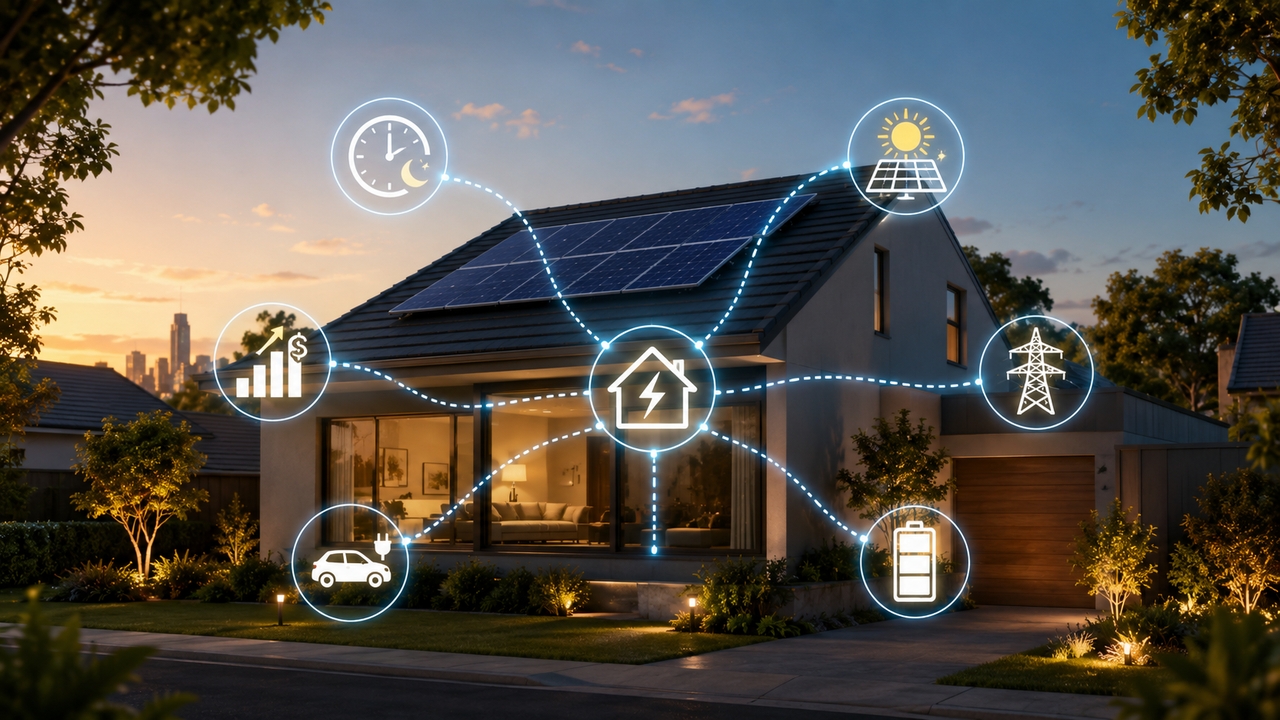
Access to flexible electricity tariffs
The most immediate financial benefit is access to Time-of-Use (ToU) tariffs. An analog accumulation meter cannot distinguish between energy used at 2 pm and energy used at 7 pm. A smart meter records both separately.
That granularity matters because retailers price electricity differently across the day. Off-peak rates, typically overnight and in the middle of the day, can be significantly cheaper than peak evening rates. Households on a ToU tariff that shift energy-hungry appliances to cheaper windows pay less for the same electricity use.
Running the dishwasher at 10 pm rather than 6 pm saves money. So does scheduling hot water to reheat at midday or charging an EV overnight rather than in the early evening. A smart meter turns each of those habits into direct bill savings.
Accurate billing and monitoring
Estimated bills are gone. A smart meter sends actual consumption data to the retailer after every 30-minute interval, so every bill reflects real usage. That removes the bill-shock cycle that came with manual reads, where a single visit might catch several months of accumulated usage.
Most retailers now provide app access to interval data. That means a household can see exactly which hours of the day are consuming the most electricity. A spike between 6 pm and 8 pm every weekday might point to the ducted air conditioning running unnecessarily. A high overnight baseline often points to a faulty hot water heater or an old second fridge quietly drawing power around the clock.
Seamless solar export tracking
For the more than 4 million Australian homes with rooftop solar, accurate export tracking is critical. Old accumulation meters often could not measure export at all, or measured it inaccurately.
A smart meter tracks every kilowatt hour that flows from the solar panels back to the grid. That data feeds directly into feed-in tariff calculations on the bill. It also gives solar households the data to work out whether storing surplus is more profitable than exporting it at the current feed-in rate.
The Australian Energy Regulator (AER) sets clear consumer protections for meter upgrades and tariff switches, which you can review before agreeing to any retailer price plan changes.
The Australian smart meter rollout: What you need to know
Australia is in the middle of a significant grid upgrade. Old analog accumulation meters are being replaced nationwide. When looking into what is a smart meter rollout schedule, the key date is 2030. That is when the Australian Energy Market Commission (AEMC) mandated that universal smart meter deployment must be complete across the National Electricity Market.
The rollout is compulsory. Under the current rules, a household cannot refuse a smart meter installation when contacted by their electricity retailer.
When will I get a smart meter?
Timing depends on the state and the local network area.
Victoria and Tasmania are effectively complete. Victoria finished its rollout years ahead of the national mandate and now sits at 99% smart meter penetration. Tasmania is close behind.
NSW, QLD, ACT, and SA are actively rolling out. The accelerated program commenced in December 2025 and is working through geographic zones progressively. Over 57% of meters across the NEM are already remotely read as of 2026.
Homes built after 2017 or those with existing rooftop solar are likely to already have a smart meter installed. If the current meter has a spinning disc or requires manual reading, it is an accumulation meter and is in the queue for replacement.
When the time comes, the electricity company will send written notice before scheduling the installation. Both renters and owners are contacted. No action is needed in the meantime. For households already planning a solar installation, understanding solar battery storage options ahead of meter upgrade day makes the transition to time-of-use pricing much smoother.
Why am I getting a smart meter?
Traditional accumulation meters were built for a simpler energy system. They counted kilowatt hours moving in one direction. They could not communicate with rooftop solar inverters, home batteries, or smart appliances. They could not track when electricity was used, only how much.
Australia's energy network is now built around two-way energy flows. Solar households export during the day and import at night. EV owners charge at different rates depending on the time. Home batteries discharge during evening peaks to avoid the most expensive grid rates. None of that can be managed, billed, or optimised without interval data.
The national upgrade gives the household more control over its own costs. It also makes the broader grid operate more efficiently, which benefits everyone connected to it.
How does the installation process work?
Installation is generally straightforward. A technician from the metering provider will arrive on the scheduled day. Power on the property is briefly cut, typically for 30 minutes to 2 hours. The old meter is removed and the new one is connected to that window. Once installed, the meter begins recording interval data automatically.
Some installations run into complications. Older meter boxes sometimes have degraded wiring, damaged weather protection covers, or, in properties built before the 1990s, asbestos in the meter panel. Where these hazards are found, the installation cannot proceed until they are repaired. The electricity company will contact the property owner to explain what remediation is needed and arrange the next steps.
There is no upfront cost for a meter replacement carried out as part of the national rollout.
How to maximize savings with your smart meter data
Having a smart meter installed is the first step. Using the data it generates is where the real savings come from.
Track and adjust daily usage habits
Most energy retailers provide an app or online portal that displays 30-minute interval data. Checking it once a week is enough to build a clear picture of when the home is using the most electricity.
Look for the two or three hours each day that show the highest consumption. In most Australian homes, the highest usage lands between roughly 4 pm and 8 pm. That is when cooking, air conditioning, and entertainment all run at once. Shifting even one or two high-draw appliances out of that window and into cheaper off-peak hours directly reduces the bill. Running the washing machine at midday and the dishwasher overnight are simple moves. Scheduling the pool pump during the solar sponge window (10 am to 3 pm) adds more. Each shift compounds across a full quarter.
Identify and eliminate phantom power drain
Interval data reveals something most households never think about checking: baseline electricity is used when nobody is home or everyone is asleep.
Pull up the overnight data in the retailer app. Look at what the home is drawing between midnight and 5 am. A genuinely efficient home might use 200 to 400 watts during those quiet hours. An older home with a second garage fridge and devices on standby might draw that figure two or three times. A continuously cycling hot water system adds more on top.
That overnight baseline is money spent on electricity that delivers no benefit. Switching off idle devices at the wall or replacing inefficient units cuts the baseline. That saving appears on every quarterly bill without changing daily habits.
Pairing your smart meter with solar storage
A smart meter accurately records how much solar energy goes back to the grid. In 2026, that export data often tells an uncomfortable story. Feed-in tariffs in most states sit between 5 and 10 cents per kWh. Buying that same energy back from the grid in the evening costs 30 cents or more.
Every unit exported and bought back at a higher rate is a financial loss. Storing that surplus in a home battery instead keeps it on-site and available when the household actually needs it.
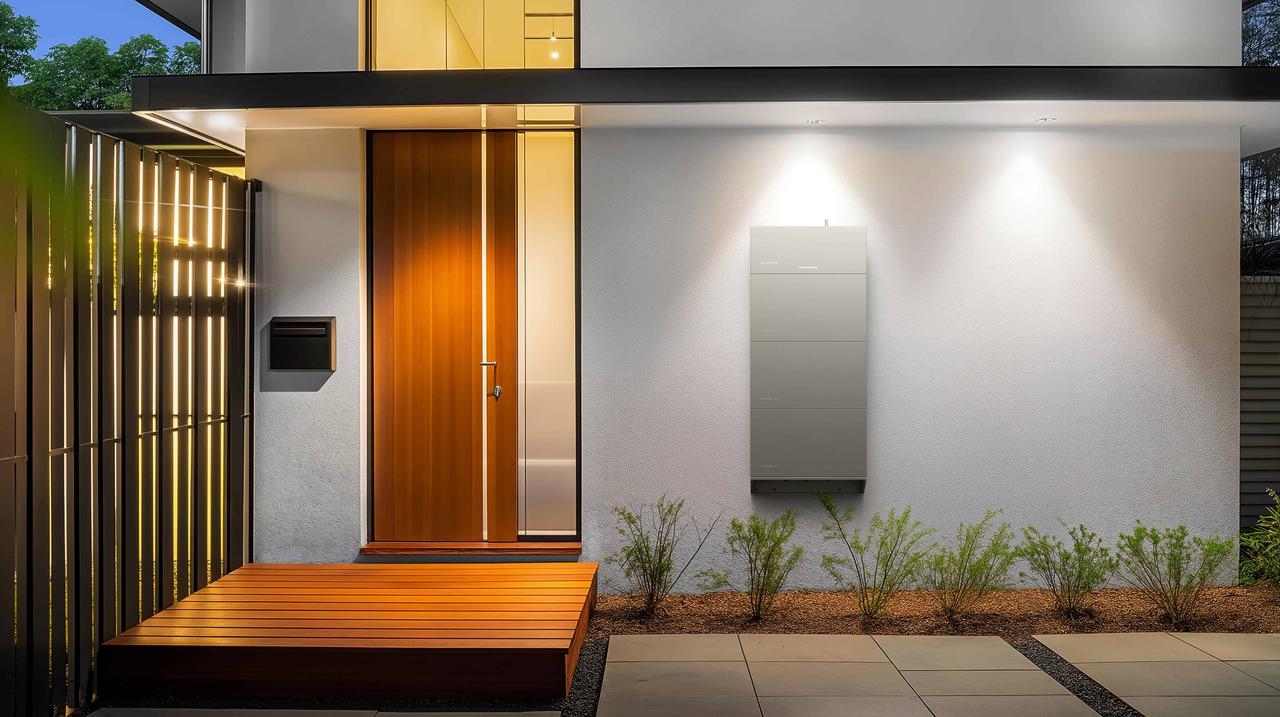
olutions such as the EcoFlow PowerOcean Single-Phase Battery integrate seamlessly with your smart meter to capture excess solar. Each 5kWh battery stores your daily generation, while Intelligent Mode automatically optimizes charge and discharge cycles based on Time-of-Use tariffs.
If your energy needs grow, the modular design easily expands up to 60kWh. Ultimately, while the smart meter tracks your grid imports and exports, the battery minimizes both, working together as a single, highly efficient system. This expandable modular battery system perfectly complements the interval usage data captured by your smart meter to cut both grid import and solar export losses year-round.
Schedule Your Free Consultation Today!
What kind of product or solution are you interested in?

Conclusion
Understanding exactly what is a smart meter is the foundation for taking real control of household electricity costs. It is not just a replacement for an old meter. It is a data tool that unlocks better tariffs, exposes wasteful appliances, and creates conditions for genuine energy independence.
The 30-minute interval data a smart meter produces is only valuable if it is acted on. Three moves consistently lower Australian household electricity bills. First, shift appliances use off-peak hours. Second, eliminate phantom drain. Third, pair the meter with a home battery that stores solar rather than exporting it cheaply.
Want to understand the potential savings based on actual smart meter data and electricity usage habits? Contact our professional energy consultants for a tailored recommendation built around the household's specific setup.
FAQs
Do smart meters use my home Wi-Fi?
No. Smart meters communicate via a dedicated network, separate from the home's broadband or Wi-Fi connection. The meter sends interval data directly to the energy retailer and distributor through its own communication system.
Can I refuse a smart meter upgrade in Australia?
No. Under the AEMC's accelerated rollout rules, smart meter installation is compulsory. If the electricity retailer contacts a household to arrange a meter upgrade, the installation cannot be refused. However, the retailer must provide adequate notice and follow consumer protection rules around tariff changes.
Who pays for a smart meter installation?
There is no upfront cost for households receiving a smart meter as part of the national rollout. Costs are recovered through energy network charges over time. If additional electrical work is needed to remedy site defects such as damaged wiring, those remediation costs are the property owner's responsibility.
How do I read my digital smart meter?
Most smart meters display a running kilowatt-hour total on a digital screen. The retailer's app or online portal provides far more useful data, including 30-minute interval graphs, solar export figures, and daily and monthly usage comparisons.
Do smart meters make electricity bills higher?
Not by themselves. A smart meter provides accurate data and unlocks time-of-use tariffs. Whether bills go up or down depends on how the household responds to that data. Households that shift usage to cheaper off-peak windows typically see bills fall. Those that continue heavy use during peak hours may see costs more accurately reflected than they were with estimated billing.