Rural Energy Agency Programs and the Role of Solar Battery Storage in Regional Australia
Living on a regional property or running a farm has its perks. Space, lifestyle, the works. But the energy side of things? That’s a different story. Long lines mean voltage drops, storms knock out the power, and network charges push your bills higher than they should be.
This guide covers the government programs backing the regional energy shift, the financial and practical upside of adding solar and storage, and the nuts and bolts of sizing, installing, and keeping an eye on a system that actually works.
Key Takeaways
Grid fragility is a big driver of the shift to storage. Remote SWER lines and exposure to severe weather leave regional households more vulnerable to voltage dips and prolonged blackouts.
Federal incentives are available. The Cheaper Home Batteries Program offers an upfront discount on eligible battery systems through the SRES, with state and local support varying by location and program availability.
True self-consumption is about more than just generation. Pairing high-capacity solar with battery storage protects rural properties from peak tariffs and lousy feed-in rates.
System sizing needs to be tailored to the property. A standard 3-bedroom home might need 10 to 15 kWh, while a working farm with water pumps and cool rooms could require 30 kWh or more. The battery has to match the critical loads.
Smart control makes the difference. Integrated inverters and dedicated monitoring give you real-time visibility over energy flows, so you can keep battery reserves ready for unexpected grid drops.
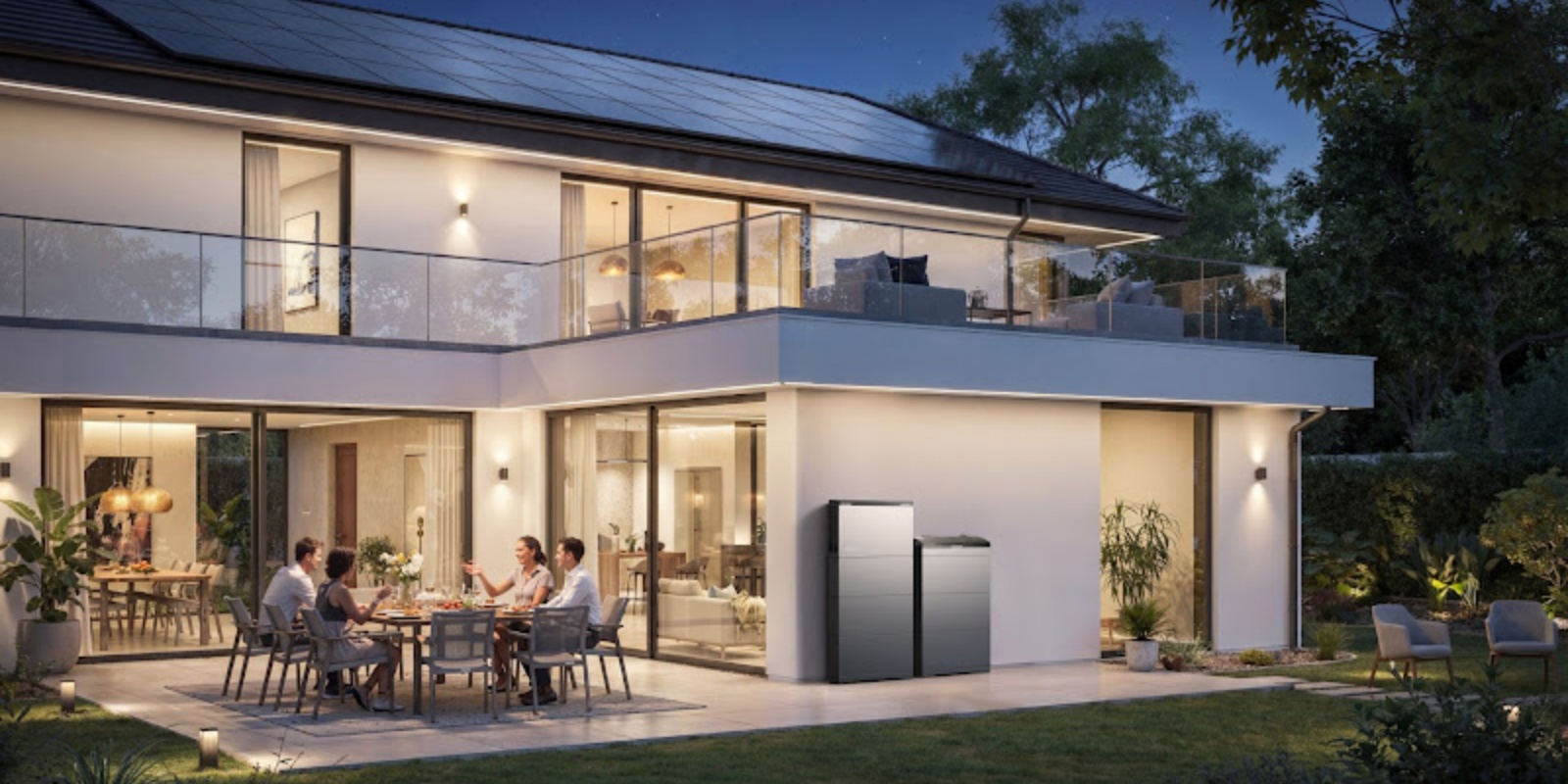
Why Does Regional Australia Need Better Energy Solutions?
For many regional communities, the traditional electricity network simply struggles to deliver the stability and affordability modern rural households require.
Higher energy costs and grid limitations in rural areas
Powering a regional home or working property costs more than running a city apartment. Distributors have to maintain thousands of kilometres of poles and wires across huge, sparsely populated areas, and those costs show up directly in your network charges.
On top of that, many rural properties sit at the end of ageing SWER lines. Long-distance transmission comes with capacity limits, voltage issues, and tight solar export caps, sometimes as low as 1.5 kW to 3 kW per phase, if export is even allowed. When you can’t export your midday solar for a decent feed-in credit, that excess power just goes to waste unless you’ve got a battery to store it locally.
Power outages and extreme weather risks in regional communities
In remote areas, storm, bushfire, or flood damage can take days to fix, much longer than in the city. Even a short outage becomes a serious problem when your property runs on electric pumps, refrigeration, communications, or livestock systems that need power to function.
Which Government Programs Support the Regional Energy Transition?
Government bodies across the Commonwealth and state jurisdictions offer targeted funding mechanisms to accelerate rural clean energy adoption.
Federal Support for Renewable Energy
At the federal level, policy targets both household hardware and larger community resilience projects. ARENA leads the charge on funding for regional microgrids and edge-of-grid trials through programs like the Regional Australia Microgrid Pilots Program. Meanwhile, homeowners benefit from upfront incentives via the Small-scale Renewable Energy Scheme and the Cheaper Home Batteries Program.
| Programme Name | Administering Body | Target Group | Key Benefit / Mechanism |
|---|---|---|---|
| Small-scale Renewable Energy Scheme (SRES) | Clean Energy Regulator (CER) | Residential & small commercial nationwide | Upfront point-of-sale discount via Small-scale Technology Certificates (STCs) on eligible solar panel & system installations. |
| Cheaper Home Batteries Program | Clean Energy Regulator (CER) / SRES | Residential homes, small businesses & regional properties | Upfront point-of-sale discount (~30%) on eligible battery systems calculated via Small-scale Technology Certificates (STCs). |
| Household Energy Upgrades Fund (HEUF) | Clean Energy Finance Corporation (CEFC) & Partner Lenders | Homeowners & rural residential properties | Concessional green loans and low-interest financing packages for home solar, battery storage, and electrification upgrades. |
| Regional Australia Microgrid Pilots Program (RAMPP) | ARENA | Remote townships, edge-of-grid & regional industry hubs | Multi-million dollar grant funding to test and deploy islandable microgrids and utility-scale community storage systems. |
| Disaster Ready Fund (Resilience Upgrades) | National Emergency Management Agency (NEMA) | Regional local councils & community emergency shelters | Co-funding community-level solar and battery backup hubs for emergency disaster coordination. |
State rebates and loans for regional solar and battery upgrades
Individual states run specialised schemes that can often be stacked alongside federal incentives:
New South Wales (NSW): The Peak Demand Reduction Scheme (PDRS) delivers financial incentives when installing an approved battery system or joining a Virtual Power Plant (VPP).
Queensland (QLD): Periodic Battery Booster programmes and interest-free regional energy resilience packages help regional Queenslanders manage air-conditioning loads and cyclone-season disruptions.
Victoria (VIC): Solar Victoria continues to provide information and support for eligible solar and energy-efficiency programs, but its previous interest-free solar battery loan is no longer accepting new applications.
South Australia (SA) & Western Australia (WA): Both states focus heavily on edge-of-grid microgrid developments (such as Horizon Power’s regional storage projects in regional WA) and aggregations through state-backed Virtual Power Plants.
Why Do Solar Batteries Pay Off in Rural Areas?
Investing in residential storage bridges the gap between abundant midday sunshine and heavy evening consumption.
Lower electricity bills through solar self-consumption
Generating 30 kWh of daytime solar electricity offers limited financial return if your energy retailer only credits you a paltry 3 to 5 cents per kWh feed-in tariff, while charging you 35 to 45 cents per kWh to run appliances after dark.
A battery changes the financial equation completely. By capturing every surplus kilowatt-hour produced during clear regional afternoons, you store clean power on-site and deploy it when rates peak in the evening. This increases your property’s solar self-consumption rate from an average of 30% to well above 80–90%, keeping retail energy spending to an absolute minimum. An EcoFlow Solar Battery can help store more daytime generation for use during expensive evening periods…
Backup power benefits for rural homes and farms
For regional households, energy resilience carries a tangible cash value that doesn’t appear on a standard power bill. A reliable backup circuit ensures that when the regional feeder line trips:
Bore and Water Booster Pumps Stay Active: Crucial for domestic drinking water, garden irrigation, and bushfire defense sprinkler setups.
Refrigeration & Cool Rooms Remain Cold: Protecting large meat lockers, bulk grocery supplies, and temperature-sensitive veterinary supplies.
Connectivity Remains Intact: Powering satellite internet dishes (such as Starlink), regional Wi-Fi routers, and communications equipment when mobile towers lose power.
Solar battery costs and long-term payback considerations
While upfront system costs range from AU7,000toAU18,000+ depending on usable capacity and chemistry (predominantly safe, long-life Lithium Iron Phosphate / LiFePO4), falling hardware prices and rising grid tariffs have trimmed regional payback periods significantly. When combined with federal STCs, state low-interest loan schemes, and the avoided cost of running noisy, fuel-hungry diesel backup generators, well-optimised regional systems routinely achieve full financial payback within 6 to 9 years—while delivering a warrantied lifespan of 10 to 15 years Reviewing current solar battery cost guides can help you compare capacity, incentives and expected payback.
How Can You Upgrade Your Rural Property with a Solar + Battery Energy System?
Building an energy setup requires careful attention to load sizing, inverter compatibility, and system monitoring.
Battery size for homes, farms and acreage properties
A small suburban battery size often falls short on rural blocks that operate high-draw machinery or multiple outbuildings. The table below outlines typical capacity requirements across different property profiles A 6.6kW solar system can be a useful baseline for smaller rural homes, although farms often need larger arrays:
| Property Profile | Typical Daily Load | Recommended Solar Array | Recommended Battery Capacity | Critical Loads Covered |
|---|---|---|---|---|
| Small Rural Homestead (2–3 Bed) | 14 – 20 kWh | 6.6 kW – 8 kW | 10 – 15 kWh | Lights, refrigeration, TV, Starlink, small pressure pump. |
| Acreage Property / Hobby Farm | 22 – 35 kWh | 10 kW – 13 kW | 15 – 25 kWh | All domestic loads, reverse-cycle air-con, bore pump, workshop tools. |
| Working Farm / Multi-Building Block | 40 – 70+ kWh | 15 kW – 25 kW+ | 30 – 45+ kWh | Multiple dwellings, commercial cool rooms, livestock water systems, heavy machinery chargers. |
Understanding the Battery STC Capacity Taper for Large Farms
The Cheaper Home Batteries Program uses Small-scale Technology Certificates (STCs) to provide an upfront discount on eligible battery installations. The number of certificates depends on factors including the battery’s usable capacity, installation date and applicable scheme rules. Larger systems may be subject to capacity limits or different incentive treatment, so rural property owners should check the current Clean Energy Regulator requirements before sizing a system around the rebate.
For extensive rural operations, modular systems allow you to capture maximum upfront STC savings on the core capacity while scaling up additional battery blocks as your load demands grow.
Solar inverter compatibility and system integration
Australian rural homes typically boast ample roof space across house roofs, machinery sheds, and hay barns. Translating that roof area into usable power requires an integrated energy storage solution that handles high solar input voltages while managing single-phase residential electrical switchboards effectively Learn how an integrated Home Energy Ecosystem can coordinate storage, solar input and household loads.
The EcoFlow OCEAN 2 Plus Single Phase offers a purpose-built home energy storage upgrade tailored for such properties. Featuring modular battery expansion, rapid switchover times for uninterrupted power during blackouts, and robust solar input capabilities, it enables regional homeowners to seamlessly connect their high-capacity rooftop solar arrays with reliable high-voltage battery storage, delivering dependable off-grid-ready resilience without complex electrical overhauls.
Monitor and optimise your system with real-time energy insights
Installing high-performance hardware is only half the battle; managing when and where those kilowatt-hours flow makes all the difference to your seasonal power bills.
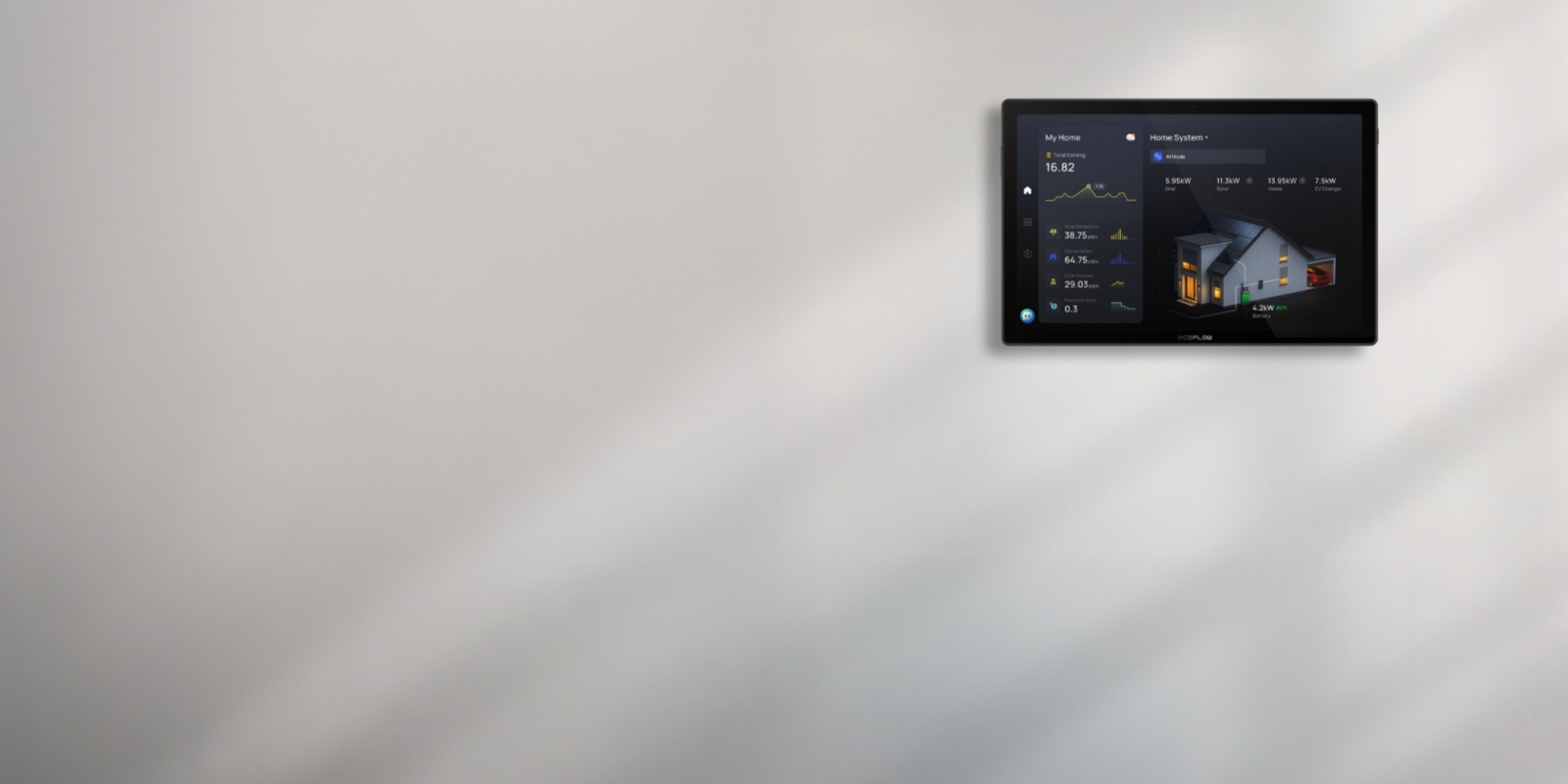
The EcoFlow PowerInsight 2 acts as an intuitive home energy management console that brings complete visibility to your system. With a clear, dedicated touchscreen and smart app integration, it allows regional property owners to track solar generation curves, monitor real-time household power consumption, check battery reserves, and dynamically automate load shifting—ensuring your battery stays primed well before an impending storm rolls in.
Schedule Your Free Consultation Today!
What kind of product or solution are you interested in?
Conclusion
For many regional Australian households, adding solar and battery storage is a practical way to get more out of your solar and lean less on the grid. The benefits really show up on properties with high electricity use, limited export capacity, or a history of power outages.
Before you commit, though, it pays to look at your daily energy use, which loads are critical, what incentives are available, and what your local network allows. Get the solar, battery, and monitoring combination right, and you’ll cut your grid purchases and keep essential gear running during blackouts.
Disclaimer: This guide is provided for general informational purposes only and does not constitute financial, technical, or legal advice. Government incentives, rebate programs, and eligibility criteria are subject to change at any time without notice. Always verify current program details directly with the relevant administering bodies (e.g., Clean Energy Regulator, ARENA, state agencies) and consult a qualified, Clean Energy Council‑accredited installer or financial adviser before making any purchase or upgrade decisions. Individual property circumstances, network constraints, and system performance will vary.
FAQ
Can rural households access the Cheaper Home Batteries Program?
Yes, eligible rural and regional homeowners connected to the National Electricity Market (NEM) or designated regional networks can participate in federal and state-supported battery financing and rebate programmes, provided the installed equipment meets Clean Energy Council (CEC) accreditation standards.
Can you get the battery rebate without solar panels?
Eligibility depends on the specific program. For the federal Cheaper Home Batteries Program, check the current Clean Energy Regulator requirements for the battery, solar PV system and installation before applying. State and territory schemes may have different eligibility rules.
Is the solar battery rebate reducing in 2026?
Yes. Federal STC incentives step down each year on 1 January through to 2030. Installations done earlier attract a higher certificate multiplier, which means a bigger upfront saving.
How many solar panels do you need to charge a battery?
You’ll generally want at least 5 kW to 6.6 kW of solar capacity, or about 12 to 16 modern panels, to reliably charge a 10 kWh battery through a typical winter day.
What's the main difference between grid-connected and off-grid solar?
A grid-connected hybrid system stays tied to the network. It can draw power when needed, export surplus, and still offer battery backup. An off-grid system runs completely independently, with no physical utility connection at all.