How Do Carbon Credits in Australia Work? A Simple 101 Guide
Australia's carbon market is bigger than most people realise. By early 2026, more than 200 large industrial facilities were operating under the Safeguard Mechanism. Each one must keep emissions within set limits or buy credits to cover the gap. The Australian Carbon Credit Unit market was valued at around AUD 1.4 billion in 2025.
For most households, that system runs in the background. Energy bills, petrol prices, and product costs all carry the indirect influence of carbon pricing. But the mechanics of carbon credits in Australia remain unfamiliar to most people outside the energy and finance sectors.
This guide explains how the system works and who it affects. It also covers what home battery backup systems and other household tools have to do with the broader picture.
What are Australian Carbon Credit Units (ACCUs)?
One ACCU equals one tonne of CO₂e. That tonne was either prevented from entering the atmosphere or removed from it through a verified project. That single unit is what the Australian carbon market runs on.
The Clean Energy Regulator issues ACCUs to individuals, landowners, and businesses that run approved emissions reduction projects. Getting an ACCU is not automatic. The project must follow a specific approved methodology. It undergoes independent auditing. It must also demonstrate that the reduction is real and additional. That means it would not have happened without the offset funding.
Projects that generate ACCUs include:
Savanna fire management in northern Australia
Reforestation and land revegetation
Soil carbon sequestration on farms
Methane capture from landfills
Energy efficiency upgrades in industrial facilities
Once issued, an ACCU is a tradable financial unit. It can be sold on the secondary market. It can be surrendered to the government through the Emissions Reduction Fund. Or it can be retired to make a voluntary offset claim. The Clean Energy Regulator reported a record 21.7 million ACCUs issued in 2025, the highest annual issuance on record.
How do carbon credits work in Australia?
Carbon credit Australia policy runs on two overlapping systems. One creates demand. The other creates supply.
Creating demand: the safeguard mechanism
The Safeguard Mechanism sets emission baselines for Australia's largest industrial facilities. Any facility emitting more than 100,000 tonnes of CO₂e annually is covered. There are currently more than 200 of them across mining, manufacturing, oil and gas, and electricity generation.
Each covered facility gets a baseline. If it emits more than that baseline in a given year, it must buy ACCUs to cover the excess. The baselines decline over time, so facilities face increasing pressure to reduce emissions or purchase more credits.
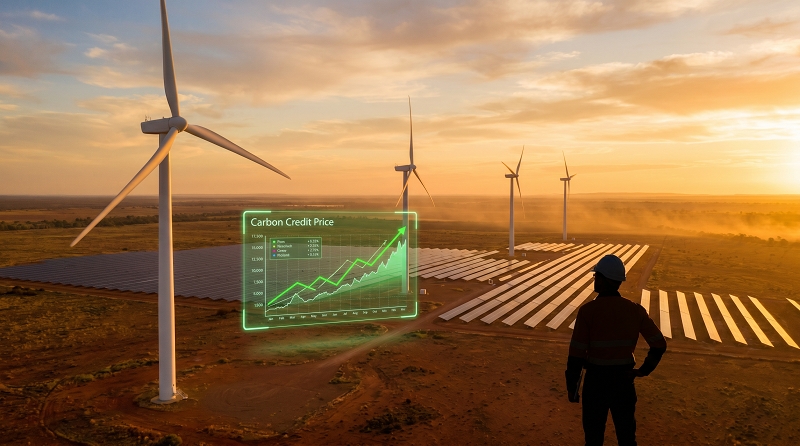
This is where the demand side of carbon credits in Australia comes from. The tighter the baselines get, the more ACCUs facilities need, and the higher the price tends to go. ACCUs were trading at around A$37.60 per tonne as of mid-June 2026.
Creating supply: the Emissions Reduction Fund
Project developers, farmers, and landowners generate ACCUs by running approved emissions reduction activities. The government purchases some of these through competitive auctions under the Emissions Reduction Fund. Private buyers, including companies seeking to offset emissions voluntarily, purchase others on the secondary market.
Supply in 2026 is projected at 22 to 26 million ACCUs, following the record issuance in 2025. The balance between supply and demand sets the price. That price determines how financially attractive it is to invest in emissions reduction projects.
How do carbon credits work in Australia for voluntary buyers?
Companies and individuals who are not subject to the Safeguard Mechanism can still buy and retire ACCUs voluntarily. Businesses pursuing Climate Active certification, individuals offsetting personal emissions, and organisations with net-zero commitments all participate in voluntary purchasing. Once a credit is retired in the registry, it is permanently cancelled and cannot be used again.
Taking action at home: from global carbon credits to your backyard
The ACCU market operates at an industrial scale. Individual households do not participate directly. But household energy and transport choices have a real effect on the emissions that the carbon market exists to address.
Every coal or gas-generated kilowatt-hour a household draws from the grid is one the grid's generating facilities must produce. Those facilities are among the largest ACCU buyers in Australia because their emissions are covered under the Safeguard Mechanism. When households reduce their grid electricity demand, they reduce the volume of fossil fuel generation needed. That indirectly reduces the demand side of the emissions that compliance systems are designed to manage.
Practical steps that move the dial include switching to rooftop solar, adding battery storage, upgrading to a heat pump hot water system, shifting to an EV, and improving insulation. Each one reduces a different slice of the household's carbon output.
None of these require any interaction with the ACCU market. They reduce household carbon intensity directly. Collectively, they represent a meaningful contribution to Australia's broader emissions profile. Understanding solar battery storage options is a practical starting point for households looking to move beyond rooftop solar alone.
How to slash your carbon footprint?
The electricity sector is where individual Australian households have the most direct influence over their own carbon emissions. The grid still relies on coal and gas for a significant share of generation. Evening peak hours are when solar drops off and demand rises simultaneously.
Battery storage is one of the tools that can help address this specific gap. A home battery stores surplus solar generated during the day. In the evening, instead of drawing from a grid still burning coal and gas, the household draws from stored clean energy. That shift can help reduce the carbon intensity of the household's electricity consumption.
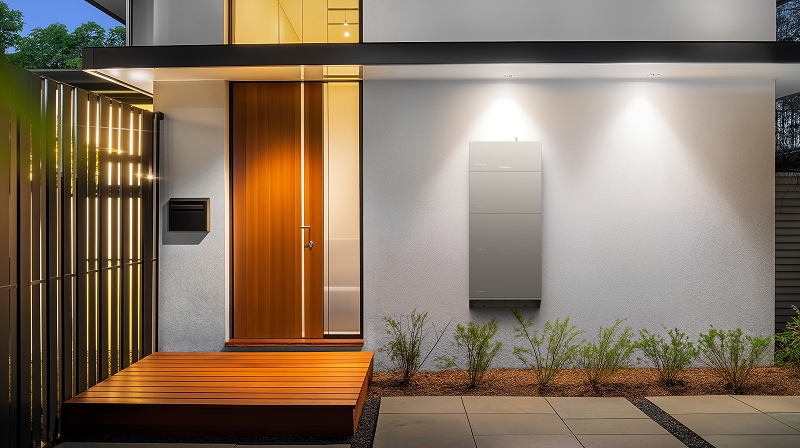
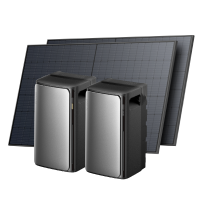
Modular solutions such as the EcoFlow PowerOcean Single-Phase Battery illustrate how this works in practice for Australian homes. Capacity starts at 5 kWh per unit and expands modularly (up to 45 kWh for single-phase & 60 kWh for three-phase) as household needs grow. It uses LFP chemistry, which handles Australia's climate conditions better than older battery types, and carries an IP65 weatherproof rating. This scalable battery system can reduce reliance on coal‑fired evening grid power, indirectly easing industrial demand for ACCUs across Australia’s compliance market.
Note: Actual emissions reductions depend on household energy use, grid mix, and system configuration.
Learn more about EcoFlow PowerOcean.
The most direct path to slashing a household's carbon footprint runs through energy use. Generating more on-site, storing what is generated, and buying less from a carbon-intensive grid all point in the same direction. For a personalised view of what that means for a specific home, contact our professional energy consultants based on actual usage and local grid conditions.
Wrapping up
Carbon credits in Australia connect industrial emissions obligations to a market that funds real emissions reduction projects. That system runs at scale and at a level most households are not directly involved in. But household choices sit downstream of it in ways that matter.
When households reduce their electricity demand from fossil fuel sources, they reduce the pressure that drives industrial carbon markets. When they generate and store clean energy, they displace grid generation. That is generation that covered facilities have to account for under the Safeguard Mechanism. Individual action and system-level policy are not separate. They operate in the same direction.
Schedule Your Free Consultation Today!
What kind of product or solution are you interested in?

FAQs
Can I earn carbon credits (ACCUs) for installing home solar panels or batteries?
ACCUs are issued for projects that follow specific approved methodologies under the ACCU Scheme. Residential rooftop solar and home battery installations do not currently generate ACCUs on their own. There is a separate federal incentive for home batteries though. The Cheaper Home Batteries Program provides around a 30% upfront discount through the STC mechanism. That is distinct from ACCUs.
How does installing a battery storage system help Australia reach Net-Zero?
Australia's net-zero target requires emissions reductions across all sectors. The electricity sector is progressing fastest, but it still carries coal and gas generation, particularly during evening peak hours. Home batteries store solar energy and discharge it in the evening, replacing fossil fuel generation at the household level.
What is the difference between an ACCU and an STC?
An ACCU represents one tonne of CO₂e avoided or removed through a verified project. It is used to meet compliance obligations under the Safeguard Mechanism or for voluntary offsetting. A Small-scale Technology Certificate (STC) is a different type of credit. It is issued to households and small businesses for installing eligible renewable energy systems, including solar panels and batteries.